What Happens If You Cut the Top Off a Conifer?
Conifers are a familiar sight in gardens and landscapes, prized for their evergreen foliage and architectural form. But what happens if you cut the top off a conifer? This question comes up often with tree care, pruning, and shaping plans. In this post, we’ll explore the biological and practical effects of removing the apical meristem, what to expect in the short and long term, and how professional tree services Mansfield can help you manage growth safely and effectively.
Introduction: understanding the basics of conifer growth
Conifers grow from the tips of their shoots, driven by the apical meristem at the shoot tip. This growth pattern means that removing the top of a conifer can disrupt the plant’s primary growth signal. For many people, the impulse to “top” a conifer stems from wanting a shorter tree or a different shape. However, topping a conifer is not the same as traditional pruning and can lead to a range of outcomes, both desirable and problematic.
Keywords: tree services Mansfield, conifer, topping, pruning, growth signals
What actually happens when you top a conifer?
- Loss of apical dominance: The apical meristem suppresses side shoots; removing it often releases the latent buds lower on the stem, leading to heavy, vigorous growth lower down.
- Suckering and dense growth: New shoots may appear quickly, creating a bushier, less uniform canopy. The tree may produce multiple vigorous leaders from below the cut.
- Increased susceptibility to disease and pests: The sudden wound surface can become entry points for pathogens, and the regrowth tissue is often softer and more prone to damage.
- Weak-wood and poor structure: The regrowth is frequently fast but weakly attached, producing a ladder of fragile branches that can fail in wind or ice.
- Temporary appearance change: You may see a drastic, bushy response rather than a neat, controlled silhouette, which can take years to even out.
Practical note: the actual outcomes depend on species, age, health, and the size of the cut. Some conifers respond more aggressively than others.
Short-term versus long-term effects
- Short term: A marked change in silhouette and a burst of new growth from lower buds. The tree may look uneven or lopsided as it regrows.
- Medium term (1–3 years): Shoots begin to mature, but the overall shape can remain irregular. Maintenance pruning becomes more challenging as new leaders compete.
- Long term (5–10+ years): Some conifers recover a balanced form if guided carefully, but many never regain the original silhouette. Repeated topping can lead to chronic stress and a weakened canopy.
If your goal was to reduce height, consider alternative methods that are less risky to the tree’s health and structure.
Safer alternatives to topping
- Crown reduction: Instead of removing the entire top, selectively prune the uppermost branches to lower the overall height while preserving the natural shape.
- Selective thinning: Remove interior branches to increase light penetration and reduce the weight on the outer limbs, improving structure without shocking the tree.
- Harsh topping avoidance: Many professionals advise against topping due to the unpredictable regrowth patterns and long recovery times.
- Regular, stage-by-stage pruning: For long-lived conifers, a planned pruning regime over several years can gradually achieve a desired size without causing severe stress.
If you’re unsure, consult with a qualified tree services Mansfield professional who can assess your specific tree and objectives.
Risks and considerations for homeowners
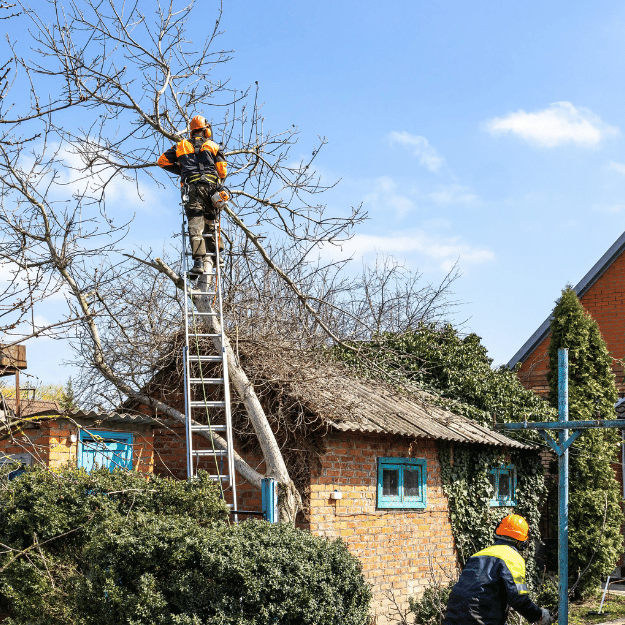
- Household safety: Cutting the top off a tall conifer can require climbing or heavy machinery, introducing safety risks.
- Property damage: A sudden heavy regrowth or branch failure can pose risks to nearby structures, vehicles, or people.
- Species-specific responses: Some conifers are more tolerant of topping (for example, certain junipers or yews) than others, but even tolerant species can suffer long-term drawbacks.
- Legal or insurance implications: In some areas, improper tree work can impact insurance coverage or violate local tree protection regulations.
Consulting with a professional is often the wisest course when a tree is tall, valued, or nearby power lines or buildings.
What to expect if you do decide to top
If topping is already underway or deemed necessary, what you’ll notice over time includes:
- A flush of new growth from the remaining leaders and bud areas.
- A change in the tree’s texture, with more rigid, new shoots appearing at first.
- A need for ongoing maintenance to control the rapid regrowth and to guide the tree toward a more stable structure.
A steady, informed approach is essential to avoid creating a maintenance nightmare.
Final thoughts
Cutting the top off a conifer is a drastic action with significant ramifications for morphology, health, and long-term stability. While you might achieve a lower height in the short term, the risks of weak structure, pest ingress, and unpredictable regrowth make it a risky choice for many conifers. If height reduction or shape modification is a goal, safer, more controlled pruning strategies offer better long-term results. For tailored advice and professional execution, consider reaching out to tree services Mansfield to assess the tree’s species, age, and overall health, and to design a plan that protects both the tree and your property.